 Dahim
Low Mood in Winter: What Islam and Health Authorities Say
✓ Sources checked on October 25, 2026
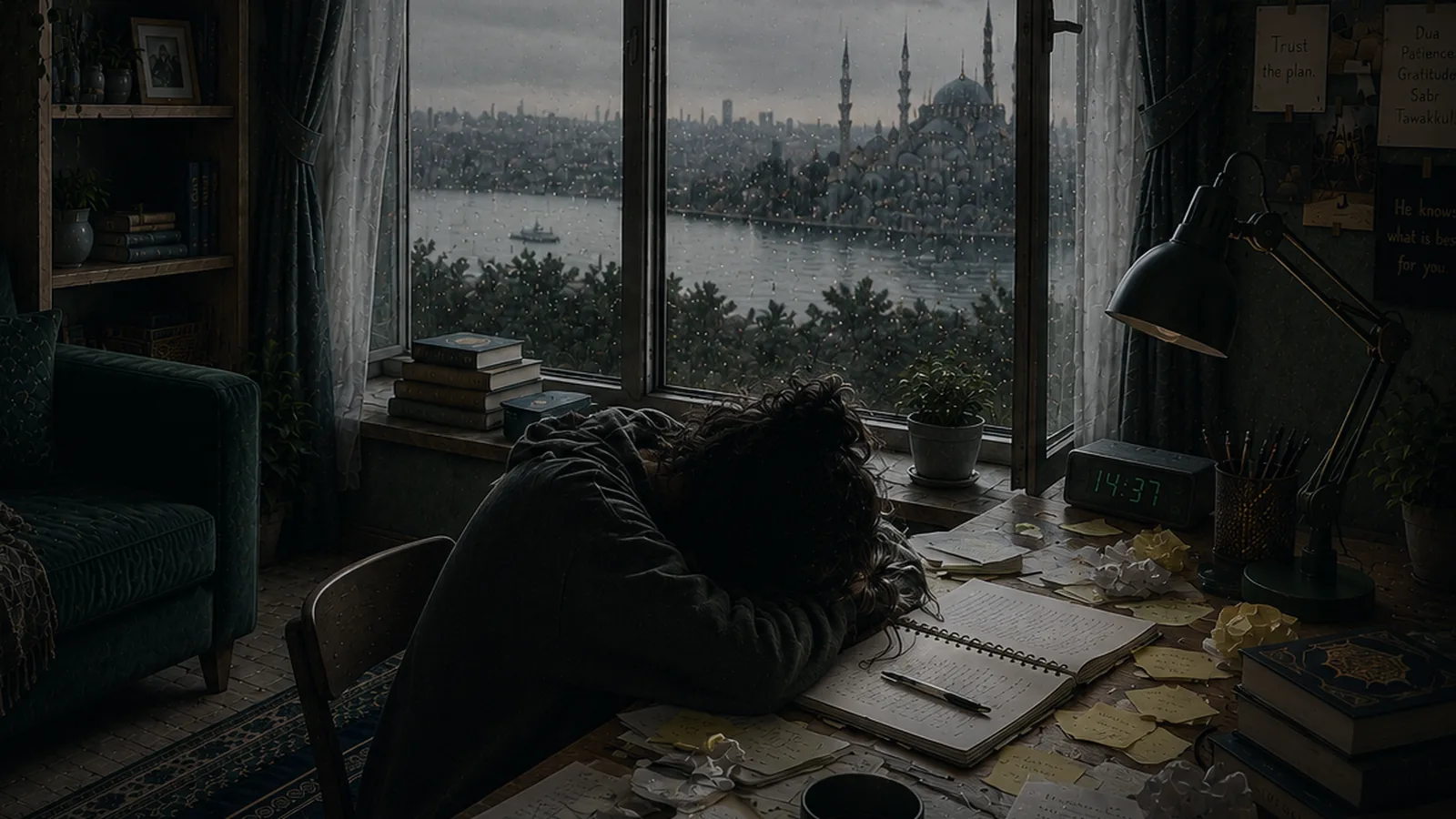
In the United States the clocks went back on Sunday, 1 November, and the evenings now arrive early. If you have noticed that you feel flatter, slower or more withdrawn since then, you are not imagining it, and you are not a weaker Muslim for it. Many people find their mood dips as daylight shrinks.
This article looks at what health authorities say about low mood in winter, what the Qur’an and Sunnah teach about sorrow, and a few gentle steps. It is not a diagnosis. Only a doctor or a mental health professional can tell you what is going on for you.
1. What health authorities say
The NHS describes seasonal affective disorder (SAD) as “a type of depression that usually happens in the winter.” It says the cause is not fully known, but it is thought to be linked to reduced levels of daylight in winter.
The US National Institute of Mental Health (NIMH) says SAD is a type of depression with a recurring seasonal pattern, and that in most cases symptoms start in the late fall or early winter and go away during the spring and summer. For winter-pattern SAD it lists symptoms such as oversleeping, carbohydrate cravings and social withdrawal, on top of a persistent sad, anxious or “empty” mood most of the day, nearly every day, for at least two weeks.
Low mood in winter does not always mean SAD. A few flat days are different from weeks of depression. That is exactly why it helps to notice how you feel over time rather than guess.
2. What the Sunnah teaches about sorrow
Islam does not ask you to pretend that sadness does not exist. The Prophet ﷺ himself asked Allah for protection from it. Anas ibn Malik reported that he used to say:
اللَّهُمَّ إِنِّي أَعُوذُ بِكَ مِنَ الْهَمِّ وَالْحَزَنِ
Allahumma inni a’udhu bika minal-hammi wal-hazan.
“O Allah, I seek refuge in You from worry and grief.”
Source: Sahih al-Bukhari 6369 (the supplication continues with other requests for refuge).
Abu Sa`id and Abu Hurairah reported that the Prophet ﷺ said that no fatigue, disease, sorrow, sadness, hurt or distress befalls a Muslim, even the prick of a thorn, except that Allah expiates some of his sins for it (Sahih al-Bukhari 5641). The hadith names sorrow and sadness among the ordinary experiences of a believer’s life. It is a comfort that your pain is seen, not a reason to hide it or to stop looking for help.
3. Allah does not burden you beyond your capacity
لَا يُكَلِّفُ ٱللَّهُ نَفْسًا إِلَّا وُسْعَهَا
“Allah does not charge a soul except [with that within] its capacity.”
Source: Qur’an 2:286.
If your capacity is smaller in winter, then your expectations of yourself can be smaller too. Do the next small thing, not everything.
4. You can speak your grief to Allah
Prophet Ya`qub (Jacob), peace be upon him, said: “I only complain of my suffering and my grief to Allah” (Qur’an 12:86). Telling Allah how heavy it feels is not a lack of patience. It is what a prophet did.
5. Small, practical steps that health sources recommend
The NHS suggests several self-care steps for winter low mood: get as much daylight as you can by going outside in the daytime every day, exercise regularly, keep in touch with other people, keep your routines, and keep a consistent sleep schedule. It also suggests avoiding too much alcohol and screens right before bed.
For Muslims, some of these fit naturally into a day that already has a rhythm. A short walk after Dhuhr or Asr, a call to a friend after Maghrib, and a steady bedtime are ideas built on that NHS advice, not rules.
Both the NHS and NIMH say treatments exist. NIMH lists light therapy, psychotherapy, antidepressant medication and vitamin D as options, used alone or together. The NHS says to speak to a GP before using a light box, particularly if you have certain eye conditions or take medicines that make you sensitive to light. Please ask a health professional which option suits you.
How to make it part of your day
- Go outside in daylight once a day, even for ten minutes, ideally earlier in the day.
- Keep one anchor in your evening. A dhikr, a short dua or a call to someone you love.
- Notice patterns. Write down once a day how you feel, so you can tell the difference between a rough week and something lasting.
- Keep your sleep times steady, as the NHS advises.
- Tell one person the truth, not just “I’m fine.”
If your nights are the hardest part, you may like our article on what to do when your heart feels heavy at night. For words to say, see 5 duas for anxiety and a heavy heart.
When to get professional help
Seeking help is encouraged in Islam. The Prophet ﷺ said: “There is no disease that Allah has created, except that He also has created its treatment” (Sahih al-Bukhari 5678). Low mood is not a lack of faith. If it lasts for two weeks or more, affects your sleep, appetite or work, or you have thoughts of harming yourself, please contact a doctor or a qualified mental health professional. In the US you can call or text 988 at any time, free and confidential, and call 911 in an emergency.
Winter does not last forever, and neither do the hardest days. Be patient and gentle with yourself while you take the next small step.
Dahim’s Mood Tracker lets you note how you feel each day, so you can see your own patterns over the weeks and talk about them with someone who can help.
Sources
- NHS, Seasonal affective disorder (SAD): nhs.uk
- NIMH, Seasonal Affective Disorder: nimh.nih.gov
- Sahih al-Bukhari 6369: sunnah.com/bukhari:6369
- Sahih al-Bukhari 5641: sunnah.com/bukhari:5641
- Qur’an 2:286: quran.com/2/286
- Qur’an 12:86: quran.com/12/86
- Sahih al-Bukhari 5678: sunnah.com/bukhari:5678
- 988 Suicide & Crisis Lifeline: 988lifeline.org
This article offers spiritual reflection only. It is not medical, psychological or religious advice, and it is not a fatwa. If you are in crisis, contact a professional or call 988 in the US.